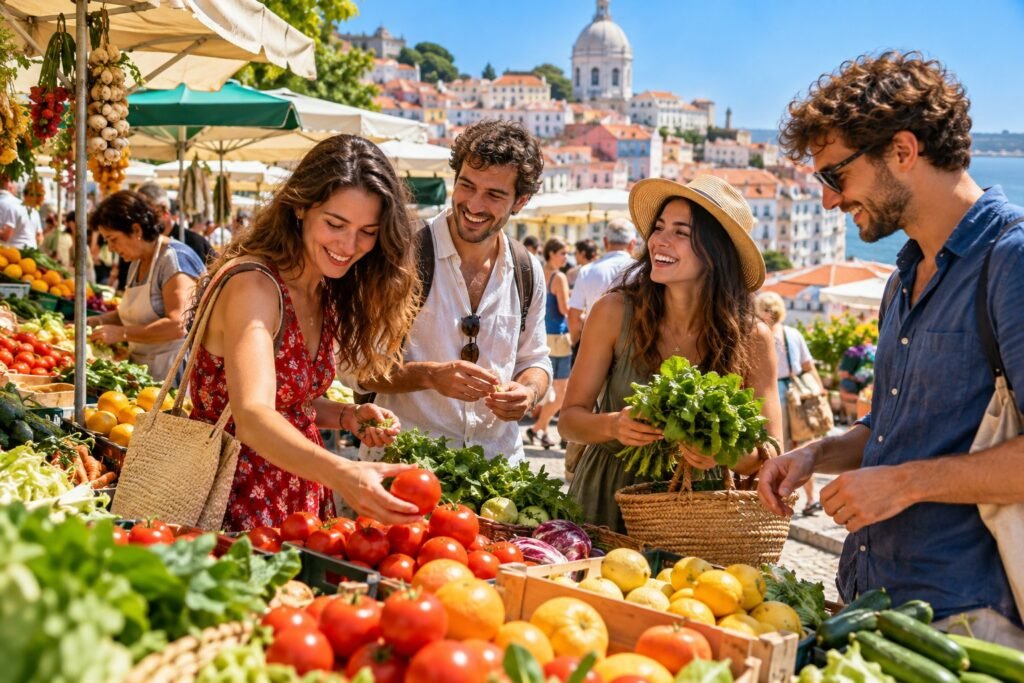
Moving to Lisbon or Porto and wondering how grocery shopping in Portugal really works? Good news: between modern supermarkets, colourful municipal markets and fresh produce that is often cheaper than in France, Germany or the Netherlands, filling your fridge quickly becomes one of the small pleasures of daily life. This guide covers the chains you will see everywhere, the loyalty cards and apps that genuinely save money, opening hours, a price comparison with home and simple tips to keep your food budget light from your very first month.
Supermarkets in Portugal: who is who?
The landscape is easy to read. Two Portuguese giants lead the market: Continente (Sonae group) and Pingo Doce (Jerónimo Martins group). You will find them in every neighbourhood, both as large stores and as small local shops (Continente Bom Dia, neighbourhood Pingo Doce). The German discounters Lidl and Aldi are well established too, with low prices and a few products that will feel familiar. Spanish chain Mercadona arrived in Portugal in 2019, first in the north and around Porto, and keeps opening stores in the Lisbon region. Add Minipreço, Auchan and Intermarché and there is always a supermarket a few minutes away on foot.
| Chain | Positioning | Card or app | Best deal |
|---|---|---|---|
| Continente | Huge range, from basics to gourmet | Cartão Continente | Discounts credited as euros on your card |
| Pingo Doce | Good value, fresh food and ready meals | Poupa Mais app | Weekend promotions, often 25 to 50% off |
| Lidl | Discounter with in-store bakery | Lidl Plus | Weekly coupons in the app |
| Aldi | Discounter, small efficient stores | Online leaflets | Low everyday prices on basics |
| Mercadona | Own brand Hacendado, excellent fresh produce | No card | Stable prices, no need to hunt for deals |
Municipal markets: the best place for fresh food
For fruit, vegetables, fish and cheese, municipal markets are hard to beat. They are run by the city councils, clean and lively, and stallholders love giving advice to newcomers. A few addresses in Lisbon:
- Mercado de Campo de Ourique: a neighbourhood market with traditional stalls in the morning and a tasting area that stays busy until the evening. Perfect for trying products before you buy them.
- Mercado de Arroios: popular for its friendly prices on fruit and vegetables, in a young and international area.
- Mercado 31 de Janeiro (Saldanha): known for its fresh fish, close to many central offices.
- Mercado da Ribeira (Cais do Sodré): traditional morning stalls right next to the famous food hall.
- Mercado do Bolhão in Porto: fully renovated, one of the most beautiful markets in the country.
Stalls usually open early in the morning, from Tuesday to Saturday, and close in the early afternoon. Saturday morning is the friendliest moment: you will meet Portuguese families as well as young newcomers planning their meals for the week.
Local products worth putting in your basket
Grocery shopping in Portugal is also a great way to discover a generous cuisine and excellent products at small prices. Look for the “Portugal Sou Eu” logo or the words “produto nacional” to support local producers. The must-haves:
- Pêra Rocha pears from the Oeste region and sweet, juicy Algarve oranges.
- Tinned fish (sardines, tuna, mackerel), a true Portuguese art and perfect for a quick lunch.
- Bacalhau (dried salted cod), the base of dozens of recipes.
- Cheeses such as queijo da Serra, São Jorge or fresh queijo fresco.
- Alentejo olive oil, vinho verde and Portuguese coffee, whole beans or ground.
- Morning bread: small carcaça rolls are sold individually and still warm.
Want to go further on the food side? Our guide to eating in Lisbon lists the dishes to try and the best places to eat out.
Cheaper or more expensive than at home?
It depends on the aisle. Local fresh produce, fish, bread, wine and coffee are clearly cheaper than in France, Germany or the Netherlands. Imported goods (foreign cheeses, branded cereals, some specialities) often cost a little more, simply because they travel. The golden rule: eat local and you win on every line. Below are indicative ranges observed in 2026, which vary by chain and season.
| Product | Portugal | France | Germany | Netherlands |
|---|---|---|---|---|
| Espresso at the counter | €0.80 to €1 | €1.80 to €2.50 | €2 to €3 | €2.50 to €3.20 |
| Bread roll (each) | €0.15 to €0.25 | €0.40 to €0.60 | €0.40 to €0.60 | €0.50 to €0.80 |
| Oranges, 1 kg | €1.20 to €1.80 | €2.50 to €3.50 | €2 to €3 | €2 to €3.50 |
| Fresh sardines in season, 1 kg | €4 to €8 | €10 to €15 | €12 to €18 | €15 to €20 |
| Decent bottle of local wine | €3 to €6 | €6 to €9 | €5 to €8 | €5 to €9 |
| Branded cereals, 500 g | €3.50 to €5 | €2.50 to €4 | €2 to €3.50 | €3 to €4.50 |
Good to know: Portuguese VAT (IVA) is reduced to 6% on most basic foods, which keeps the essentials affordable. To understand your consumer rights in another EU country, the official Your Europe consumer portal is a great resource.
Loyalty cards, apps and promotions: the real savings
In Portugal, loyalty cards are not a gimmick: they make a real difference on your receipt. You can sign up for free during your first week.
- Cartão Continente: every promotion adds euros to a balance you spend on your next shopping trips. It also works in other stores of the group.
- Poupa Mais (Pingo Doce): the app offers personalised discounts and vouchers on products you buy often.
- Lidl Plus: weekly coupons, digital receipts and rewards that grow as you spend more during the month.
- Too Good To Go: very active in Lisbon and Porto, letting you collect surplus bags from bakeries and supermarkets for €3 to €5.
Another local habit: give your tax number (NIF) at the checkout to receive an invoice in your name. Part of your everyday spending can then count in your Portuguese tax return. Your home bank card works everywhere, and if you open a local account, our article on getting a bank account in Portugal explains how to use MB Way, the payment app everyone uses here.
Opening hours and small habits to know
Supermarkets usually open from 8 or 9 am until 9 or 10 pm, seven days a week, Sundays included. Only a few public holidays, such as 25 December and 1 January, bring closures or shorter hours. Small neighbourhood shops often stay open later. A few habits worth adopting:
- Plastic bags are charged: keep a reusable bag in your backpack.
- In some stores, you weigh your fruit and vegetables yourself on a scale that prints the price label.
- Weekly leaflets (folhetos) are available in the apps: check them on Wednesday or Thursday to plan your shopping.
- Home delivery exists (Continente Online, Glovo, Uber Eats) but costs a few euros extra: handy during your first days, not essential afterwards.
What grocery budget per month in Portugal?
If you cook most of your meals and use the promotions, one person usually spends between €180 and €250 a month on groceries. Here is a realistic weekly basket for one person in a Lisbon supermarket.
| Category | Example | Cost per week |
|---|---|---|
| Fruit and vegetables | Market or supermarket, seasonal produce | €8 to €12 |
| Protein | Chicken, eggs, fish, tinned fish | €12 to €16 |
| Carbs and bread | Rice, pasta, carcaças | €4 to €6 |
| Dairy | Milk, yoghurts, queijo fresco | €5 to €7 |
| Pantry and drinks | Coffee, oil, spices, water | €6 to €9 |
| Hygiene and cleaning | Spread over the month | €4 to €6 |
| Total | €39 to €56 |
And when your accommodation is already taken care of, this budget becomes very comfortable. That is the case with the jobs we offer. We recruit French, German and Dutch speakers for customer advisor and content moderator roles in their native language in Portugal, with accommodation provided for the whole contract (shared flat, bills and internet paid), your flight reimbursed for French speakers or paid directly for German and Dutch speakers, a renewable 12-month contract, paid training and a salary of around €1,060 gross paid 14 times a year. What you have left, around €900 to €1,000 a month, easily covers groceries, going out and savings. To see how much you can put aside, read our guide on how to save money while working in Portugal and browse our jobs in Portugal. You can also explore other opportunities across Europe on the official EURES portal.
FAQ
Which is the cheapest supermarket in Portugal?
Lidl and Aldi generally have the lowest prices on basics, and Mercadona is very competitive on its own brand. Continente and Pingo Doce become just as interesting once you use their loyalty cards and weekend promotions.
Are supermarkets open on Sundays in Portugal?
Yes, the vast majority of supermarkets open on Sundays, often with the same hours as on weekdays. Municipal markets, on the other hand, usually close on Sundays and sometimes on Mondays.
Can I find products from home in Portugal?
Yes, especially at Continente, Auchan, Lidl and Aldi: French cheeses, German bread and sausages, Dutch cheese and even peanut butter. They cost a bit more than at home, so it is the perfect excuse to try the Portuguese alternatives, often delicious and cheaper.